A first aid kit small enough to bring
The kit that helps is the one in your pack. Here is a short list that fits in a hip pocket.
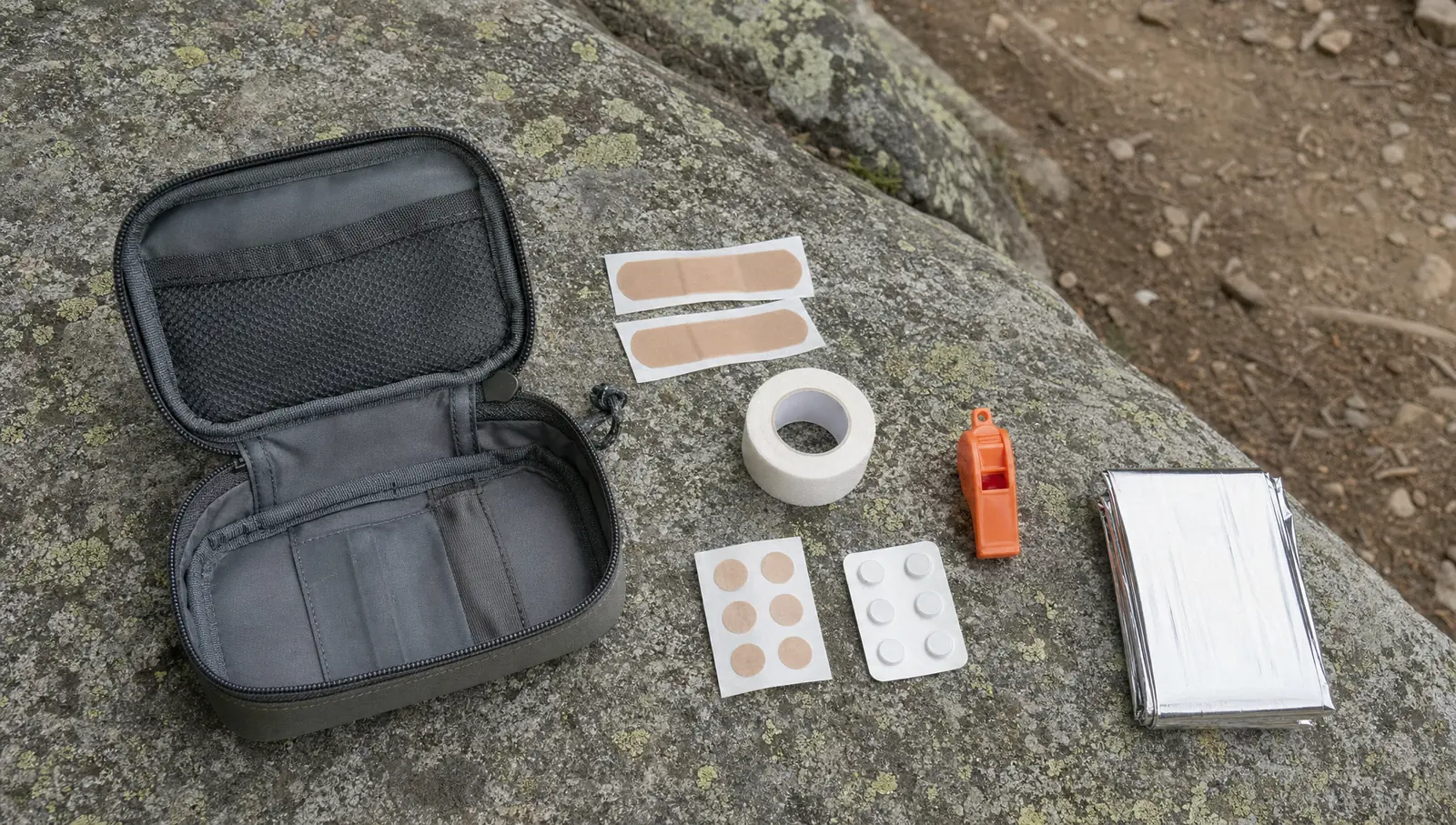
Big store-bought kits tend to stay in the car because they are bulky, and the ones that do come along are often full of things nobody knows how to use. For most day hikes, a small, simple pouch covers what usually happens on the trail: blisters, scrapes, small cuts, a turned ankle, a headache, a splinter.
The contents below fit in a pouch about the size of a paperback and weigh a few ounces.
What goes in
For blisters, which are the most common trail injury by a long way, pack a few blister patches of the gel or moleskin kind, a small roll of athletic or medical tape and a couple of alcohol wipes. Tape a hot spot as soon as you feel it. Two minutes early saves an hour of limping later.
For cuts and scrapes, a handful of adhesive bandages in mixed sizes, two or three sterile gauze pads and a small packet of antibiotic ointment. Clean water from your bottle is the best rinse for a scrape. A pair of nitrile gloves takes up almost no room and is worth carrying in case you end up helping someone else.
For sprains, an elastic wrap bandage. It is the bulkiest thing in the kit and the one most people leave out. A rolled ankle a few miles from the car is far easier to walk out on with a firm wrap.
For aches and allergies, a few doses of whatever pain reliever you normally take, and an antihistamine. If anyone in the group has a known severe allergy, their prescribed medication comes every time, and someone else should know where it is and how to use it.
For splinters and ticks, fine-pointed tweezers.
For a bad day, a whistle, a small foil emergency blanket, and a pencil with a scrap of paper. A whistle carries farther than a voice and takes much less effort. The blanket weighs almost nothing. The paper is for writing down what happened and when, if you ever have to send someone for help.
Add any personal medication, with a spare dose or two of anything you take daily in case the day runs long.
What stays home
Much of what fills a boxed kit is not worth the weight on a day hike. Scissors can be replaced by a small knife you already carry. Large trauma dressings, splints and suture kits belong with people trained to use them. A thick booklet is less use than a phone with a first aid app downloaded before you lose signal. Pack everything in a zip bag inside the pouch, because a kit soaked in a creek crossing is a bag of wet paper.
Keeping it useful
Use a bright pouch so it is easy to find at the bottom of a pack, and keep it in the same pocket every time. Check it each spring. Replace what you used, throw out anything expired and make sure the ointment has not leaked over everything else.
A kit helps most in the hands of someone who knows how to use it. A basic first aid course, the kind offered by community colleges, outdoor clubs and the Red Cross, is a few hours well spent, and wilderness first aid courses go further for people who head deeper into the backcountry.