The drive home is the longest part of the day
Trip plans tend to stop at the trailhead. The road back deserves a plan of its own.
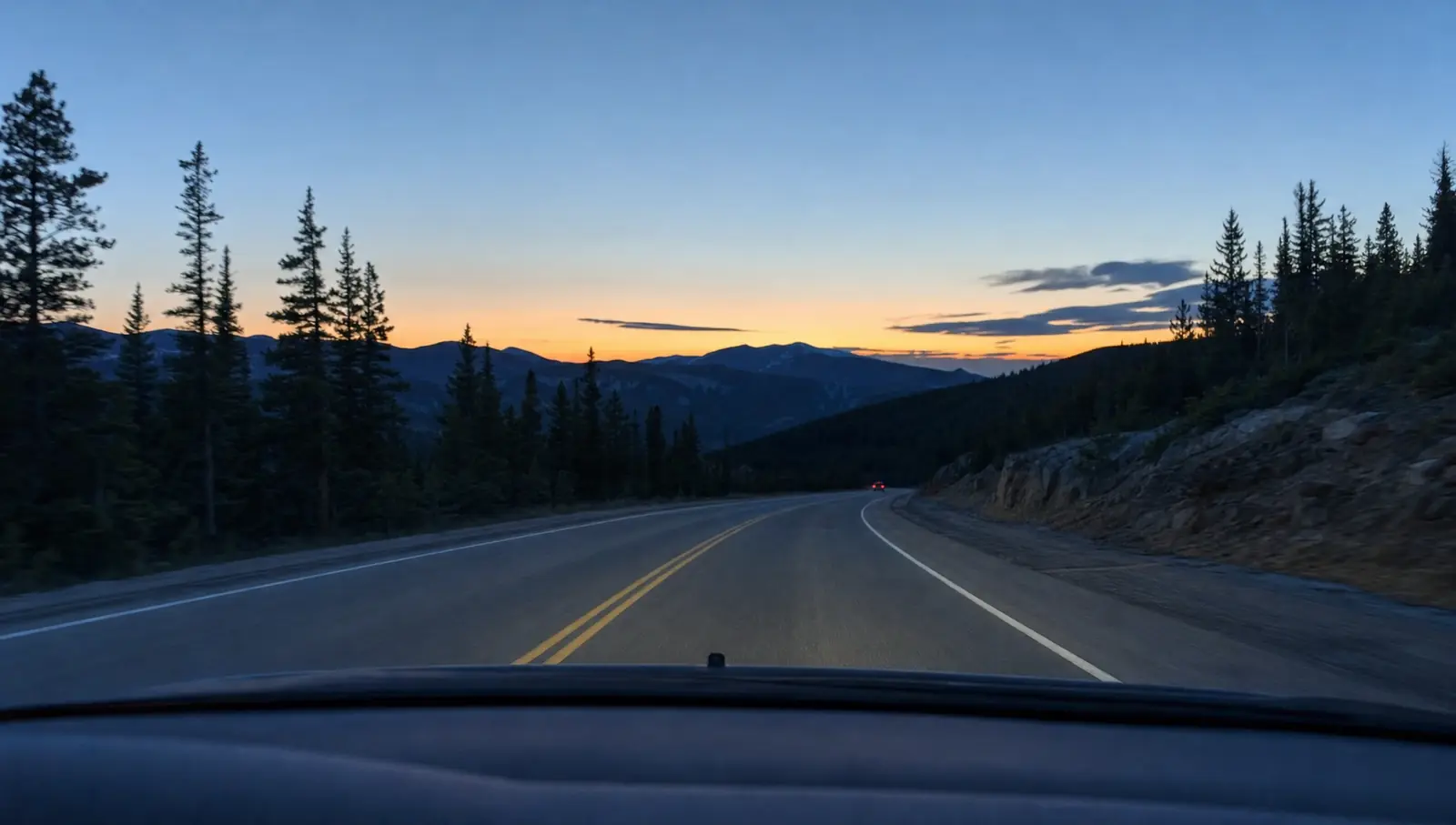
Most trip planning stops at the trailhead. People check the forecast, the mileage, the water sources and the parking, then treat the drive back as a formality. Yet it is the part of the day when they are most tired, most dehydrated and most eager to be somewhere else, and it usually happens in fading light on roads they drove only once, that morning, in the other direction.
A hard day outside costs more than leg strength. Hours of sun and wind, a few thousand feet of climbing and a light lunch leave the body ready to shut down the moment it sits in a warm, quiet car. The hum of tires on pavement does the rest. Anyone who has caught their head dropping on a straight stretch of highway knows how little warning there is.
Tired driving looks a lot like impaired driving
Fatigue slows reaction time, narrows attention and makes it harder to hold a lane. The Sleep Foundation keeps a plain summary of the warning signs of drowsy driving: frequent yawning, heavy eyelids, trouble remembering the last few miles, drifting over the line or onto the rumble strip. By the time those show up, the driver is already past the point where an open window or loud music will help for long.
The awkward part is that a tired driver is a poor judge of how tired they are. The same fog that slows the reflexes also makes "I'm fine, it's only ninety minutes" sound reasonable.
Plan the return before the trip starts
The fix starts at home, in the same sitting where you pick the route.
- Work backward from the drive. If the drive home is two hours and you want to be off the road by full dark, that sets the latest time you leave the trailhead, and that time sets your turnaround on the trail. A number written down in the morning is easier to keep than one invented at four in the afternoon.
- Name the driver for the way back. On a group trip, whoever drove out is often the one who pushed hardest on the trail. Decide in advance who drives home, and pick the person who expects the easiest day.
- Know where you can stop. Look for a town, a lit rest area or a diner about halfway. A planned stop is easier to take than an unplanned one, and it gives everyone a target.
- Leave supplies in the car. A full water bottle, a real snack and a dry layer waiting at the car make a difference. Coming off the trail hungry and cold is how people end up pushing through the drive to get to dinner.
At the car
Take ten minutes before turning the key. Change out of wet socks. Eat something with salt in it. Drink a full bottle of water. Walk around the lot while everyone else packs up. None of this feels urgent when the light is going, which is the reason to make it a habit.
If you hiked alone, text someone the time you are leaving and when you expect to arrive. It costs nothing and gives the drive a deadline someone else is watching.
On the road
The first half hour is usually fine. The trouble tends to start after the turn onto the main highway, when the road straightens out and the car warms up. A few rules hold up well.
- Stop at the first sign. Yawning, heavy eyelids or a missed turn are reasons to pull over at the next safe place, and waiting for a third sign only shortens the margin.
- A short nap works better than coffee alone. Twenty minutes in a well-lit, legal spot, ideally with a coffee just before, so the caffeine arrives as you wake up. Neither replaces a night's sleep, but together they buy time.
- Keep the passenger awake too. A passenger who sleeps leaves the driver alone with a quiet car. One who talks, navigates and watches the driver's face is a real safety device.
- Leave the dark mountain road for the morning if you have to. Rural two-lane roads have narrow shoulders, more wildlife, sharper curves and longer waits for help. If the day ran long and everyone is spent, a cheap motel or a night at a legal pullout beats an hour of fighting sleep on a winding road.
Deer, dusk and long shadows
Coming back at dusk puts you on the road during the hours when deer and elk move most, and when low sun throws glare across the windshield. Slow down on wooded stretches, use high beams when the road is empty, and watch the shoulders as much as the lane. Where there is one deer there is often another a few seconds behind it. Braking hard in a straight line is safer than swerving into the other lane or off the road.
A clean windshield, inside and out, matters more than people expect. The film that builds up on the inside of the glass turns low sun and oncoming headlights into a white smear. A cloth in the door pocket fixes it in a minute.
Count the drive as part of the trip
The best days outside end with a hot meal and a bed, and the drive is the last leg of getting there. Give it the same planning as the climb: a time, a driver, a place to stop and enough food and water to arrive with a clear head. It is a short list, and it covers the stretch of the day that most trip reports leave out.