Pick a turnaround time before you leave the car
The person who sets the time at breakfast is rested and fed. Let that person win the argument at two in the afternoon.
A turnaround time is the hour at which you head back down, whether or not you reached the top. Mountaineers have used the idea for a long time. It works just as well on an ordinary day hike, and it is one of the simplest safety habits there is.
The reason to set it before you start is that judgment gets worse as the day goes on. Near the top of a climb, tired and close to the goal, almost everyone wants to keep going. The summit is just over that rise. The clouds might hold. A time chosen at the kitchen table that morning was chosen by a rested, fed person with a map.
How to set one
Start with when you need to be back at the car. That might be sunset, or an hour before it if the drive home is long or the road is unlit. Then estimate how long the return will take. Most people walk down faster than they walk up, though by less than they think, and tired legs on loose rock slow everyone down. A rough rule is to allow at least half the time the ascent took, plus a margin, and more if the trail is steep or rough.
Subtract that from your back-at-the-car time. That is your turnaround. Write it down, or set an alarm on your phone, so it goes off whether you are watching the clock or not.
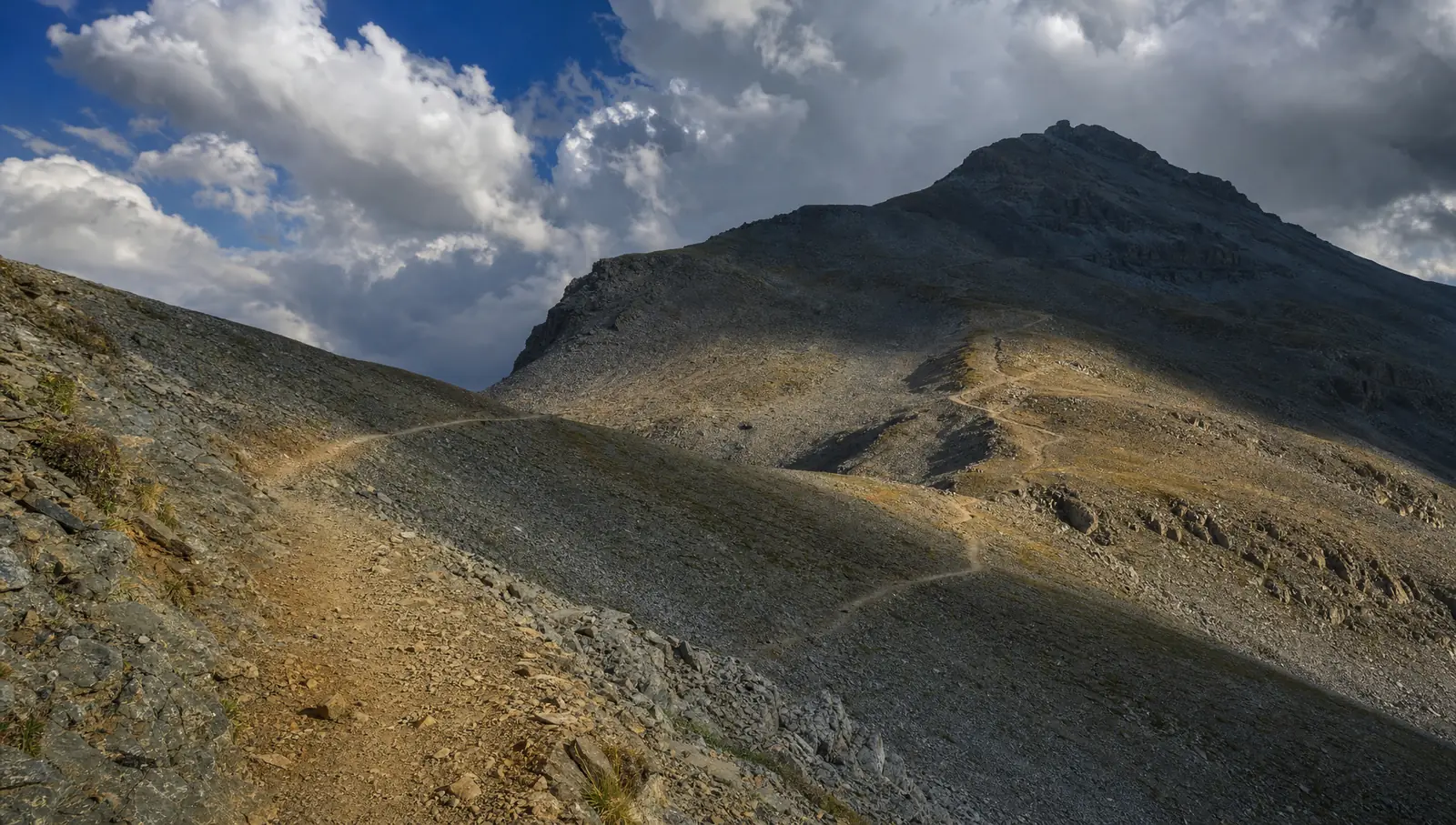
In places with afternoon thunderstorms, the weather sets an earlier deadline. In many mountain ranges in summer, storms build after midday, and an exposed ridge is a bad place to be when they arrive. There the usual advice is to be off high ground by early afternoon, which often means turning around before noon.
When the alarm goes off
Turn around. That is the whole rule, and it is harder than it sounds. A few things make it easier.
- Agree on the time as a group before starting, so nobody has to be the one who calls it.
- Treat the time as already decided. At the alarm the only question is which way is down.
- Pick a second goal. A lake, a viewpoint or a saddle below the summit gives the day a finish line even when the top is out of reach.
Turning back early is common and a little humbling. Most people who hike for years have a short list of peaks they turned away from at least once. The mountain is still there next weekend.
Other reasons to head down
The clock is one signal. Others deserve the same respect: thunder, a sudden drop in temperature, someone in the group moving slower and slower, water running low, or a trail that turns out harder or more exposed than expected. Any of these is a good reason to turn around before the planned time.
The National Park Service has a short guide called Hike Smart that covers planning, what to carry and what to do if you get lost. It is worth reading before a first trip into unfamiliar country.