The last half mile is on the road
When the lot is full, the hike starts on pavement shared with cars that are not expecting you.
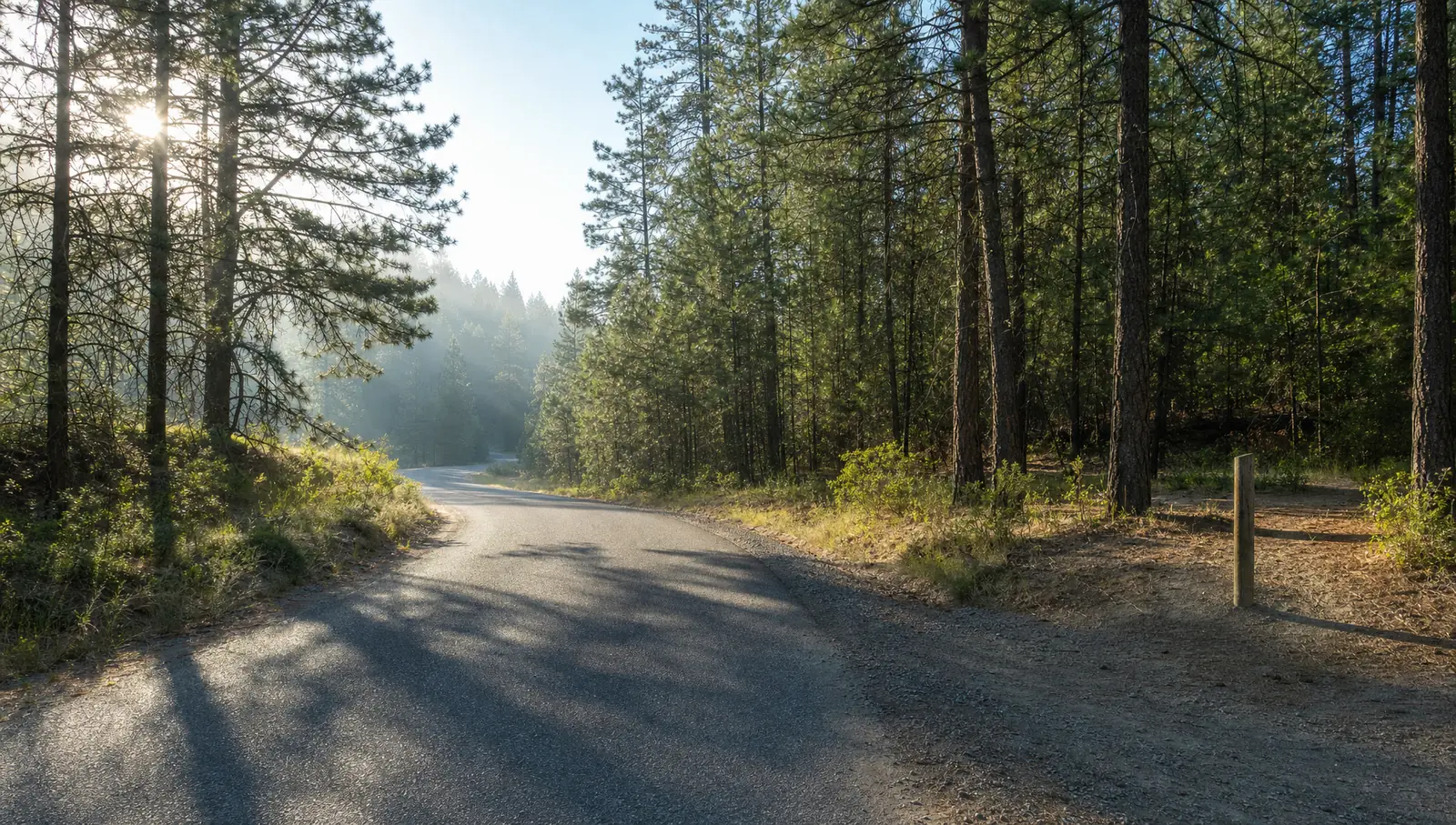
Plenty of good hikes begin with a walk along pavement. The trailhead lot fills by eight, the overflow is a row of cars on the shoulder a quarter mile back, and the first part of the day becomes a walk along a road built for cars. It is short, so people treat it casually. It is also the one place on the trip where hikers share space with traffic.
Rural roads near trailheads tend to share a few traits: narrow lanes, gravel shoulders or no shoulder at all, curves that hide what is around the bend, and drivers who know the road well enough to drive it fast. Early and late light makes it worse, because a low sun puts the driver's eyes straight into the glare.
Walk facing traffic
Where there is no sidewalk, walk on the left side of the road, facing oncoming cars. You can see what is coming and step off the pavement if a driver is drifting or looking at a phone. Walking with traffic puts the cars behind you, where you can only hear them, and on a windy day or beside a creek you may not hear them at all.
The exception is a sharp curve to the left. A walker on the inside of that curve can be invisible to drivers until the last moment. It is sometimes safer to cross before the bend, walk the outside where drivers see you from farther off, and cross back once the road straightens. Cross where you can see a long way in both directions.
Single file, short leash
Groups like to walk two or three across and talk. On a road with no shoulder, that puts someone in the lane. Drop into single file whenever a car approaches, and stay that way on curves and hill crests. Keep dogs on a short leash on the side away from traffic, and keep children on the inside.
Be easy to see
Trail clothes are usually the colours of the trail. Greys, greens and browns disappear against a wooded roadside, especially in shade. A bright layer or a cheap reflective band on a pack changes how early a driver notices you. At dusk or in the dark, carry a light and switch it on. A headlamp on a low setting, or a small clip-on light on the back of the pack, gives a driver something to see well before your clothing does.
Parking with the walk in mind
Where you park decides how much road you will walk.
- Park fully off the pavement, and only where parking is allowed. A car with two wheels in the lane pushes drivers toward the people walking.
- Read the signs. Many popular trailheads tow from the shoulder, and a ticket or a tow at the end of the day is a miserable way to finish.
- If the lot is full and the overflow means a long stretch of busy road, a second-choice hike or another day may be the better call.
- Unload on the side away from traffic, especially with children.
Arriving early still solves most of this. The lot has room, the road is quiet and the walk to the trail is a few steps across gravel.
The walk back
The walk in is usually the easy one. In the afternoon people are tired, the group has spread out, the light is going and the road is busier with others heading home. Regroup at the trailhead before stepping onto the road, put the bright layer and the light back on, and walk the last stretch with the same care as the first. Then load up from the side away from the road and pull out slowly, watching for the next group walking in.